
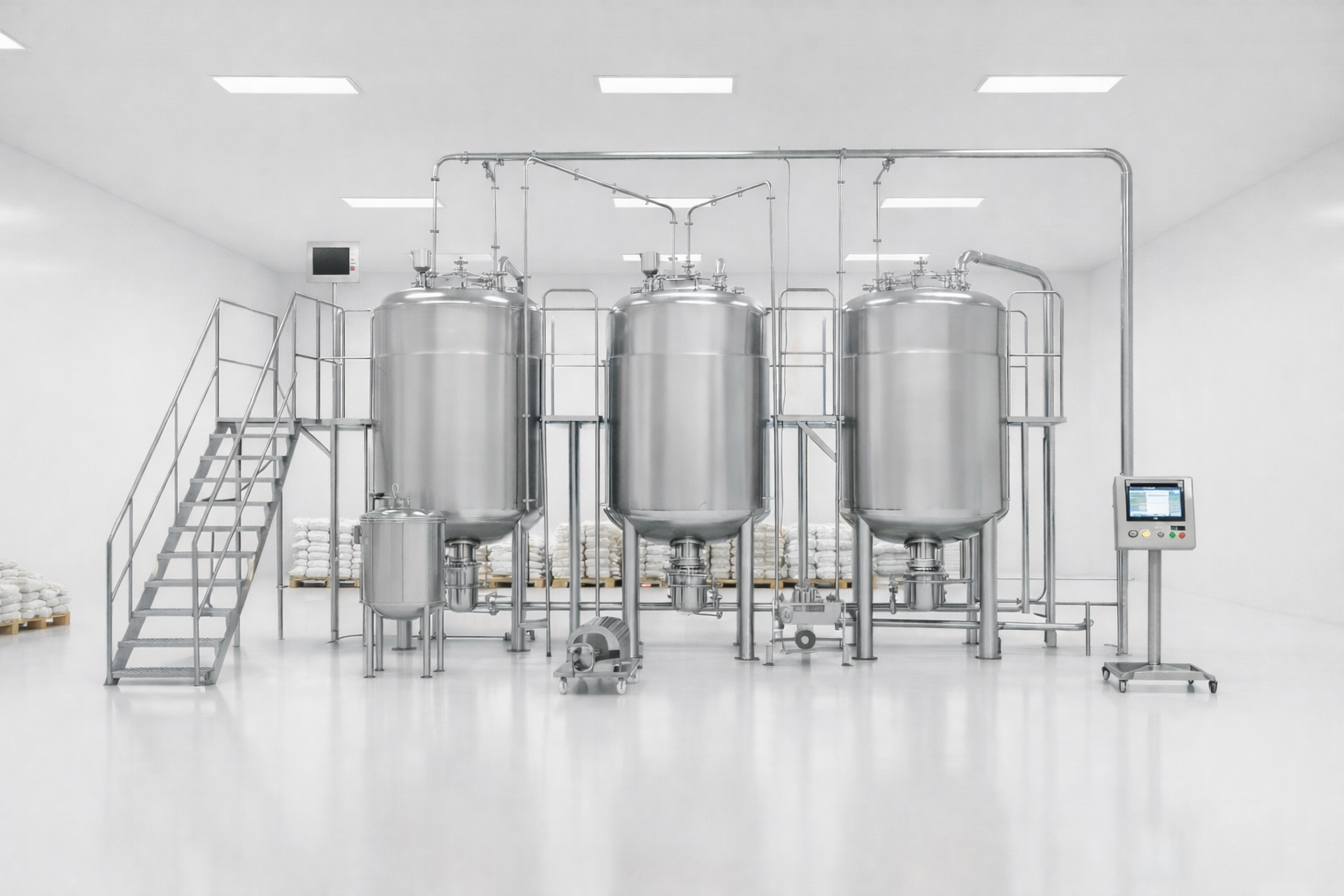
Liquid oral medicines remain one of the most widely used dosage forms across the pharmaceutical industry. Syrups, suspensions, oral solutions, and liquid formulations require precise processing to maintain consistency, stability, taste, and therapeutic effectiveness. The quality of the manufacturing equipment directly influences the quality of the final product.
Selecting a reliable Liquid Oral Syrup Manufacturing Plant Manufacturer is therefore a critical decision for pharmaceutical companies looking to achieve consistent production results while meeting regulatory requirements.
A well-designed liquid oral processing plant supports every stage of manufacturing, from ingredient preparation and mixing to filtration, storage, transfer, and final filling. Properly engineered systems help maintain product quality while improving production efficiency.
Understanding a Liquid Oral Syrup Manufacturing Plant
A liquid oral syrup manufacturing plant is an integrated processing system used to produce:
- Syrups
- Oral solutions
- Suspensions
- Emulsions
- Medicated liquids
- Nutraceutical liquids
- Herbal formulations
The plant consists of multiple process vessels and support equipment working together to create uniform liquid formulations. Each component contributes to maintaining batch consistency and hygienic production conditions.
High-quality pharmaceutical machinery helps manufacturers achieve repeatable results across production cycles while maintaining strict quality standards.
Why Precision Matters in Liquid Oral Manufacturing
Liquid formulations often contain a combination of active pharmaceutical ingredients, sweeteners, preservatives, flavors, colors, and stabilizers. These ingredients must be processed under controlled conditions to ensure uniform distribution throughout the batch.
Several factors make precision essential:
- Accurate ingredient mixing
- Controlled temperature management
- Consistent homogenization
- Effective filtration
- Reliable transfer systems
- Hygienic storage conditions
A properly designed plant helps manufacturers reduce process variations while maintaining product specifications.
Key Components of a Liquid Oral Processing Plant
Modern liquid oral manufacturing facilities depend on multiple interconnected systems.
Manufacturing Vessel
The manufacturing vessel serves as the primary processing unit where ingredients are mixed and dissolved. Key features often include:
- Stainless steel construction
- Heating and cooling arrangements
- Agitators for uniform mixing
- Insulated design
- Process control systems
Sugar Syrup Preparation Vessel
Many oral liquid formulations require sugar syrup preparation as a base ingredient. Benefits include:
- Consistent syrup quality
- Controlled heating process
- Uniform dissolution
- Improved production efficiency
Storage Vessel
Storage tanks are used for holding processed liquid formulations before filling operations. Important advantages include:
- Hygienic product storage
- Easy cleaning procedures
- Controlled product handling
- Reduced contamination risks
Filtration System
Filtration helps remove unwanted particles and supports product clarity. Functions include:
- Product purification
- Improved appearance
- Enhanced quality control
- Better process consistency
Transfer Pumps
Transfer systems move products between processing stages while maintaining hygienic conditions. Advantages include:
- Reduced manual handling
- Faster production flow
- Improved safety
- Better operational control
Features of Modern Pharmaceutical Processing Equipment
Manufacturers investing in liquid oral production facilities should evaluate equipment features carefully.
- Stainless Steel Contact Parts: Stainless steel remains the preferred material for pharmaceutical applications due to its durability and cleanability.
- Automated Process Controls: Automation allows operators to monitor critical process parameters such as temperature, mixing speed, batch timing, and transfer operations.
- CIP and SIP Compatibility: Clean-In-Place (CIP) and Sterilize-In-Place (SIP) systems help maintain hygienic manufacturing conditions while reducing cleaning time.
- GMP-Oriented Design: Equipment should support compliance with pharmaceutical manufacturing standards through hygienic construction and easy maintenance.
Applications Across Multiple Industries
Liquid oral processing plants are not limited to pharmaceutical manufacturing alone.
Pharmaceutical Industry
Used for producing cough syrups, antacid suspensions, vitamin syrups, pediatric formulations, and oral medicines.
Nutraceutical Industry
Supports production of health supplements, nutritional liquids, wellness formulations, and dietary supplements.
Ayurvedic Industry
Suitable for herbal syrups, traditional medicinal liquids, and plant-based formulations.
Food and Beverage Industry
Certain liquid processing applications also extend to food-grade products that require controlled mixing and storage.
Benefits of a Well-Designed Liquid Oral Manufacturing Plant
Choosing the right Liquid Oral Syrup Manufacturing Plant Manufacturer offers several long-term benefits:
- Consistent Product Quality: Uniform mixing and controlled processing help maintain consistency across production batches.
- Improved Production Efficiency: Integrated systems reduce production time and support higher output levels.
- Better Resource Utilization: Efficient processing reduces wastage and improves material handling.
- Enhanced Regulatory Compliance: Proper equipment design supports adherence to GMP and cGMP standards.
- Reduced Downtime: Quality construction and dependable components contribute to reliable plant operation.
Factors to Consider Before Selecting a Manufacturer
Several factors should be reviewed before investing in liquid oral manufacturing equipment:
- Engineering Capability: The manufacturer should possess strong design and fabrication expertise.
- Product Quality: Equipment construction quality directly affects operational performance and longevity.
- Customization Options: Production requirements vary across manufacturers. Equipment should accommodate specific capacity and process needs.
- Technical Support: Installation, commissioning, training, and maintenance services remain important considerations.
- Industry Experience: Manufacturers with pharmaceutical industry experience generally provide better process-oriented solutions.
Why India Continues to Lead Pharmaceutical Equipment Manufacturing
India has become a preferred destination for pharmaceutical equipment manufacturing due to its strong industrial capabilities and pharmaceutical sector growth. Several advantages contribute to this position:
- Advanced engineering expertise
- Skilled workforce
- Modern manufacturing facilities
- Competitive production costs
- Strong pharmaceutical ecosystem
- Growing global demand
Microtech Engineering – Supporting Pharmaceutical Manufacturing Excellence
Microtech Engineering is a manufacturer and supplier of industrial and pharmaceutical equipment based in Maharashtra, India. The company offers a range of processing solutions designed for pharmaceutical, nutraceutical, cosmetic, food, Ayurvedic, and chemical industries.
The company’s portfolio includes liquid oral processing plants, ointment manufacturing systems, storage tanks, blenders, dryers, milling equipment, and material handling solutions. Microtech Engineering focuses on delivering equipment that supports reliable production performance and efficient process operations.
Characteristics of an Effective Liquid Oral Processing Plant
A modern plant should provide:
- Uniform mixing capability
- Reliable heating and cooling systems
- Efficient filtration arrangements
- Hygienic storage facilities
- Automated process control
- Easy cleaning procedures
- GMP-focused construction
- Smooth product transfer systems
Checklist Before Purchasing a Liquid Oral Processing Plant
Before finalizing a purchase decision, manufacturers should assess:
- Required production capacity
- Product types being manufactured
- Available installation space
- Utility requirements
- Compliance expectations
- Automation preferences
- Future expansion plans
- Maintenance requirements
Conclusion
Selecting the right Liquid Oral Syrup Manufacturing Plant Manufacturer is a key step toward achieving efficient, compliant, and reliable pharmaceutical production. Quality equipment supports consistent formulations, better process control, and smooth manufacturing operations.
Modern pharmaceutical machinery plays an essential role in maintaining product quality while improving operational efficiency. Advanced pharmaceutical processing equipment helps manufacturers manage mixing, filtration, storage, and transfer processes with greater accuracy and reliability.
Microtech Engineering continues to support pharmaceutical manufacturers with process-focused equipment designed to meet industry requirements. Through quality engineering, practical design, and manufacturing expertise, the company provides solutions that help businesses maintain dependable and efficient production operations.