
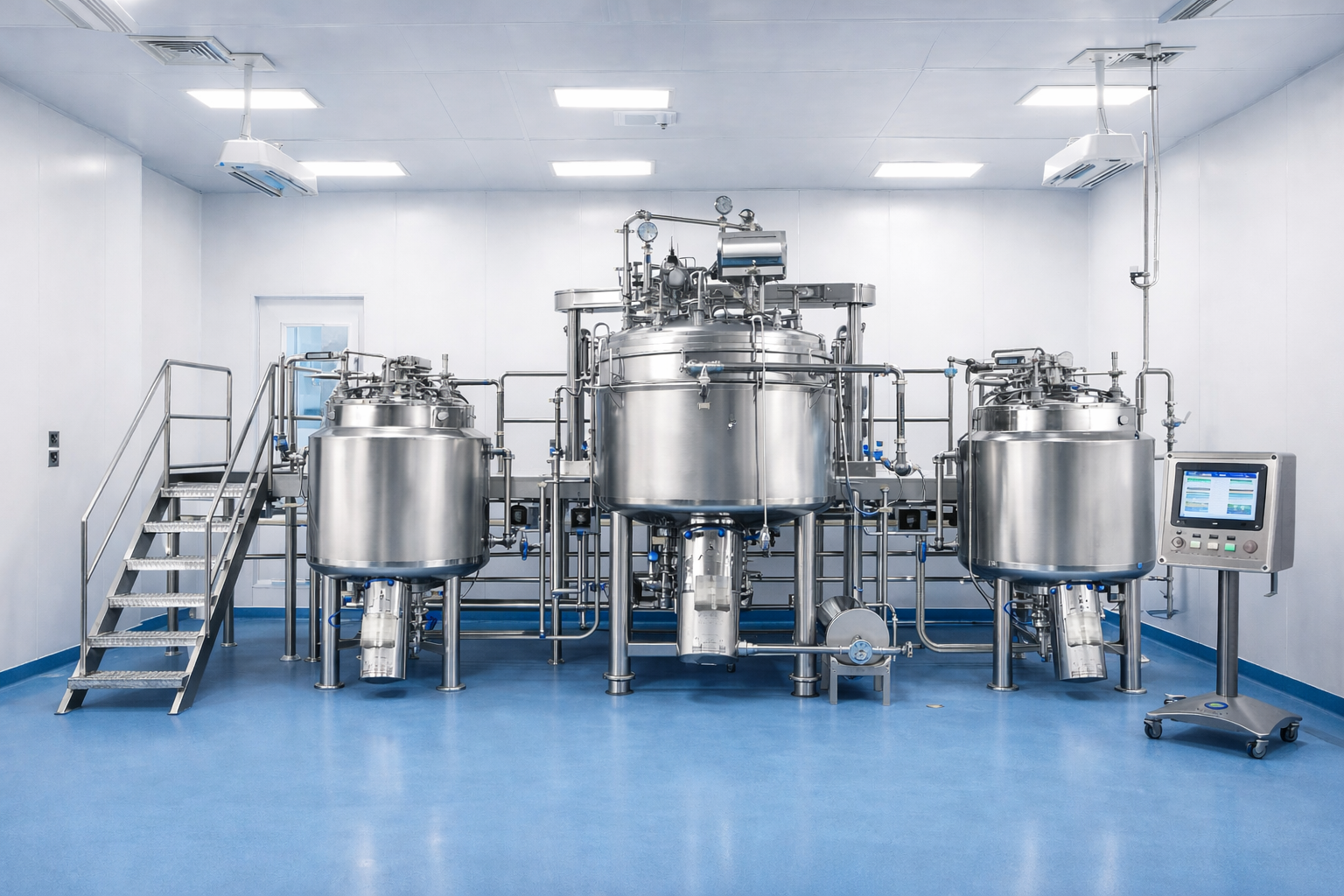
In the pharmaceutical manufacturing sector, the acronym cGMP (Current Good Manufacturing Practice) stands as the gold standard of quality assurance. Enforced by regulatory bodies like the US FDA, MHRA, and WHO, cGMP rules ensure that pharmaceutical products are consistently produced and controlled according to quality standards appropriate to their intended use.
Why cGMP Matters in Equipment Design
For machinery manufacturers like Microtech Engineering, cGMP is not just a certification—it is a fundamental engineering discipline. Every weld, finish, valve, and gasket must be designed to minimize contamination risks and ensure easy, verifiable cleaning. If processing equipment is difficult to clean, residual product from one batch can contaminate the next, potentially compromising patient safety and leading to costly regulatory recalls.
Key Pillars of cGMP Machinery Manufacturing
1. Material Selection (SS 316L vs SS 304)
The primary material used in pharmaceutical machinery is stainless steel due to its strength, corrosion resistance, and ease of cleaning. However, not all grades of stainless steel are equal:
- SS 316L (Low Carbon): This is the mandatory grade for all product contact surfaces (e.g., mixing blades, vessel linings, piping). The addition of molybdenum and low carbon content makes it highly resistant to pitting, corrosion, and chemical sanitizers.
- SS 304: Used for non-contact components such as support legs, control panels, and outer cladding.
2. Surface Finish (Ra Value)
Rough metal surfaces can harbor microscopic product residue and bacteria. cGMP dictates strict surface roughness (Ra) standards:
- Interior product contact surfaces must be polished to a mirror finish, achieving an Ra ≤ 0.4 µm (micro-meters). For injectables or biotech applications, this is further refined through electropolishing to Ra ≤ 0.2 µm.
- Exterior surfaces are typically polished to a satin/matte finish (Ra ≤ 0.8 µm) for cleanroom aesthetics and ease of wiping down.
3. Sanitary Design and Dead Legs
Hygienic design requires that there are no "dead legs" (stagnant pockets where fluid can accumulate) or crevices in the piping or vessels. All piping connections should use sanitary tri-clamps with FDA-approved food-grade gaskets (such as EPDM, PTFE, or Silicone) instead of threaded connections, which are notorious for harboring contaminants.
4. Automated Cleaning (CIP & SIP Integration)
Modern pharmaceutical plants utilize Clean-in-Place (CIP) and Steam-in-Place (SIP) systems. Machinery must be built with spray balls and drainage points that allow cleaning solutions and high-pressure steam (up to 130°C) to reach every interior corner, enabling automated sanitation without dismantling the plant.
Documentation & Validation Support
Under cGMP, "if it wasn't documented, it didn't happen." Manufacturers must provide comprehensive validation documents to the pharmaceutical company, including:
- DQ (Design Qualification): Proof that the machine's design matches user specifications.
- IQ (Installation Qualification): Verification that the equipment is installed correctly with mill test certificates for steel, weld logs, and radiography reports.
- OQ (Operational Qualification): Test protocols demonstrating that the machinery runs safely at its designed parameters.
Conclusion
Designing cGMP-compliant machinery requires deep engineering expertise and strict quality control. At Microtech Engineering, our dedication to precision welding, mirror-polishing, and full documentation ensures that our processing plants stand up to the most rigorous regulatory audits worldwide.